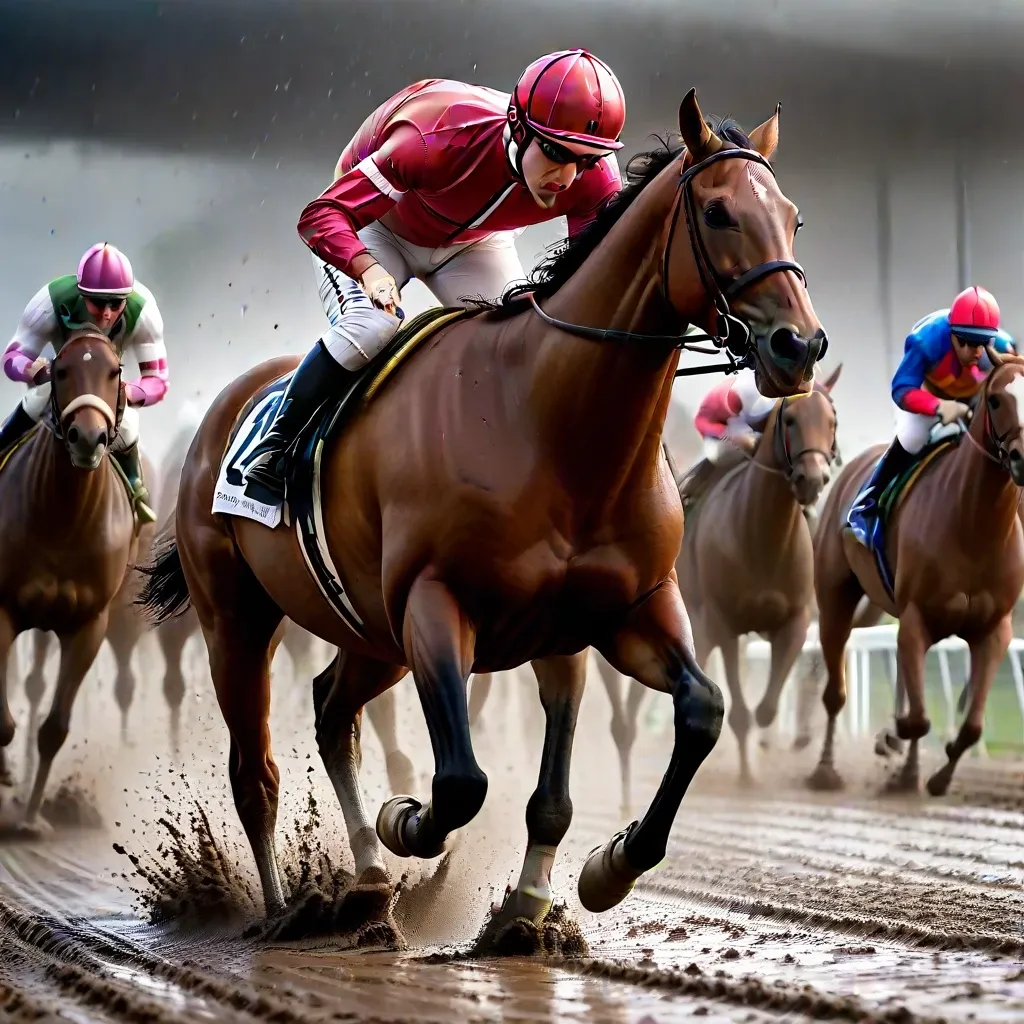
The roar of the crowd, the pounding of hooves, the thrill of victory – horse racing is a sport of passion and strategy. But what happens when the skies open, and the track transforms into a muddy battleground? That’s when the ‘mudders’ come alive.
Remember the Belmont Stakes, when a relatively unknown horse, dismissed by many due to forecasts of heavy rain, surged through the slop to claim an unexpected victory? That’s the power of a mudder. These horses possess a unique ability to thrive on a wet track, turning challenging conditions into their advantage. Identifying and betting on these horses can provide a significant edge.
A “mudder” is a horse that races well on a wet or muddy track, conditions also known as “off-track”. Spotting these horses is key to successful betting, and that’s where this guide comes in. Consider this your insider’s track to understanding the world of mudders. As a horse racing expert, I’m here to break down everything you need to know, from identifying these horses to understanding how track conditions impact their performance. Prepare to transform your betting strategy and unlock the secrets of the wet track warrior.
What Makes a “Mudder”?
In the thrilling world of horse racing, the term “mudder” is often whispered with a mix of admiration and strategic calculation. A mudder is a horse that demonstrates a distinct advantage and excels on wet or off-tracks – surfaces that would typically hinder the performance of other racers. These conditions, brought on by rain or consistent moisture, create a challenging, often unpredictable race environment.
The distinguishing characteristic of a mudder lies in its ability to navigate these less-than-ideal conditions with surprising speed and agility. A horse considered a mudder often showcases significantly improved performance on a muddy track compared to its performance on a fast, dry track. This improvement can manifest in various ways – securing wins, unexpectedly placing, or simply showing a marked increase in its Beyer Speed Figure.
Defining a mudder isn’t an exact science, and the criteria remain somewhat subjective within the horse racing community. However, most experts agree that a true mudder not only tolerates a wet track but actively thrives in the conditions where other horses struggle.
Decoding Track Conditions
Understanding track conditions is crucial for anyone involved in horse racing, whether you’re a seasoned bettor, an owner, or simply a fan of the sport. The state of the track significantly affects a horse’s performance, impacting speed, stamina, and even preferred running style. A surface listed as “fast” on a sunny day can transform into a completely different beast after a downpour. Let’s break down the common track conditions you’ll encounter and what they mean for the race.
The Spectrum of Wet Tracks
When rain enters the equation, things get particularly interesting. Here’s a closer look at wet track conditions, moving from least to most saturated:
- Wet Fast: This is the best-case scenario when it comes to a wet track. The track has surface moisture, but it’s still firm underneath. Think of it like a slightly damp sponge – it might glisten, but it’s not squishy. Horses can still achieve relatively quick times on a wet fast track.
- Good: After some drying, a “good” track is almost dry but still has some moisture. This represents a sweet spot where the surface isn’t too taxing.
- Sloppy: Now we’re entering muddier territory. A “sloppy” track is wet on top with a saturated base. Imagine running through thick soup – horses will expend more energy navigating this surface. You will see standing water on some spots and horses will kick mud onto the jockeys.
- Muddy: A “muddy” track is even wetter than sloppy, with deep, clinging mud. Stamina becomes paramount here, and horses who prefer to run on the lead or close to the pace often struggle. Horses with bigger strides are going to have issues.
- Heavy: Similar with muddy, but even more wet. The track is fully saturated with a lot of standing water. It’s rare to see races run at this conditions.
- Sealed: If heavy rain is expected, track officials might “seal” the track. This involves using a heavy roller to compress the surface, preventing further water penetration. A sealed track can be either wet or dry underneath, but the goal is to create a consistent, albeit potentially slow, surface. It help the water to run off, without soaking the soil.
Remember that these are general guidelines. The specific impact of each track condition depends on the track’s composition (dirt, turf, synthetic), drainage, and even the type of rain. Some horses thrive in the mud, while others prefer a fast, dry surface. Analyzing a horse’s past performances on various track conditions is key to making informed decisions at the track.
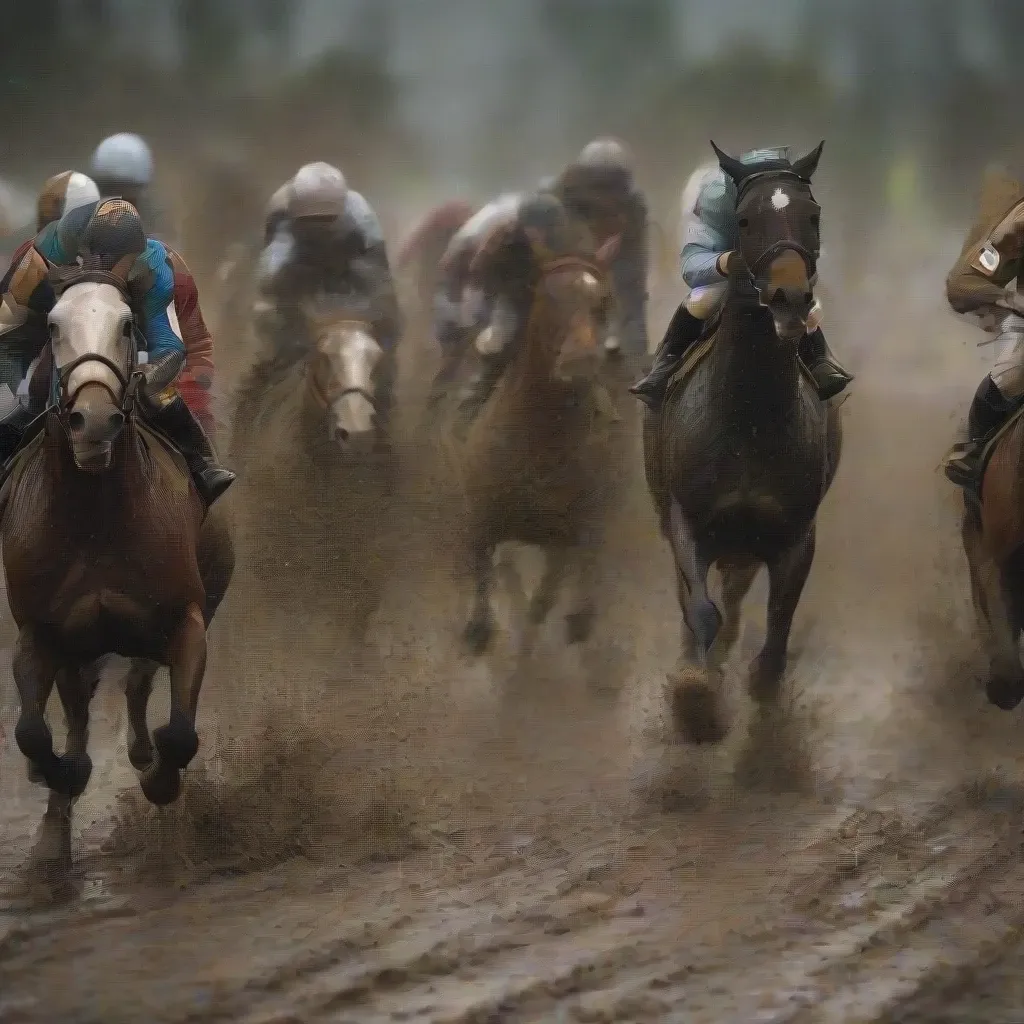
Reading the Form: Identifying Mudders in the Past Performances
Unlocking the secrets to successful handicapping often lies within the detailed chronicles of a horse’s past performances. When the skies open and the track turns to slop, a savvy bettor knows to look beyond the overall record and delve into a horse’s affinity for running in the mud. Identifying potential “mudders”—horses that thrive on wet tracks—requires a strategic approach to analyzing past performance data.
Checking the “Off” Record
The first step in identifying a mudder is to pinpoint their performance on previous “off” tracks. This crucial information is typically found within the past performances provided by sources like the Daily Racing Form (DRF) or Equibase. Scrutinize the track conditions listed for each race. Look for designations such as “muddy,” “sloppy,” or “heavy,” all of which indicate a wet track. Note the horse’s finishing position, margin of victory (or defeat), and any comments regarding their performance on that particular day. A horse that consistently improves its placing or maintains a strong performance on these surfaces is a prime candidate for a mudder.
Interpreting Speed Figures
Speed figures offer a numerical representation of a horse’s performance, adjusted for track conditions and other variables. Beyer Speed Figures and Equibase Speed Figures are two popular options. When evaluating a horse’s mud potential, pay close attention to their speed figures on wet tracks. A true mudder will often exhibit speed figures on “off” tracks that are equal to—or even higher than—their figures on dry tracks. Look for patterns. If a horse consistently earns a higher Beyer or Equibase rating when the track is wet, it suggests a genuine aptitude for those conditions.
Identifying Mud Pedigrees
Delving into a horse’s pedigree can reveal hidden clues about their potential as a mudder. A “mud pedigree” refers to a lineage tracing back to ancestors known for their success on wet tracks. Certain bloodlines have a reputation for producing horses that relish the slop. While not foolproof, this can be a valuable indicator. Research the sires and dams in the horse’s family tree. Some prominent bloodlines often associated with mud-loving horses include those known for stamina and a strong, determined running style. Keep in mind that pedigree is just one piece of the puzzle, but it can certainly add weight to your assessment.
Beyond the Stats: Other Factors to Consider
While past performance on wet tracks offers valuable insights, it’s not the only determinant of a horse’s potential success in muddy conditions. Several other elements can significantly influence a horse’s ability to navigate a rain-soaked racetrack.
The Trainer’s Touch
An experienced trainer familiar with preparing horses for wet track conditions can be a game-changer. These trainers understand the nuances of adjusting a horse’s training regimen to build the stamina and agility required for racing in the mud. They know how to fine-tune a horse’s fitness, focusing on exercises that strengthen the muscles needed for powerful strides through the heavier surface. A trainer’s expertise can provide a crucial edge, even for a horse without a stellar wet-track record.
Shoeing for Success
The type of shoe a horse wears can dramatically impact its grip and stability on a wet track. Certain shoeing techniques are specifically designed to enhance traction in muddy conditions. For instance, shoes with added studs or caulks can provide extra bite on the slippery surface, preventing the horse from losing its footing. The farrier’s skill in selecting and applying the appropriate shoes can be a deciding factor in a horse’s performance.
Size and Stride
There’s some debate about whether larger horses inherently perform better on wet tracks. While a bigger horse might possess greater power, efficiently managing that power becomes essential in the mud. A long stride, advantageous on a dry track, can become a liability in the mud if the horse struggles to maintain its rhythm and footing. Some horses adjust their stride naturally, shortening it to maintain balance and conserve energy. These stride adjustments, whether innate or trained, are vital to a horse successfully navigating the challenging conditions of a wet racetrack, no matter its size.

Betting Strategies for Wet Tracks
Navigating the world of horse racing on a wet track requires a shift in perspective and strategy. The information covered so far builds a solid foundation, but translating that knowledge into winning bets is the ultimate goal. Here’s how to refine betting approaches when the track turns sloppy.
Adjusting Betting Strategies for Off-Tracks: The first instinct should be to re-evaluate pre-race handicapping. Throw out assumptions based on firm-track form. Focus intently on a horse’s performance on wet surfaces. Look for horses with proven records in similar conditions, noting specifics like distance and track type. A horse that excels on a muddy mile at one track might not replicate that performance on a sloppy six furlongs at another.
Unearthing Value Bets in the Mud: Wet tracks often introduce chaos, which can lead to inflated odds on horses that genuinely relish the conditions. This is where value lies. Dig deep into past performances – a horse might have a single, overlooked win on a wet track years ago, suggesting an untapped affinity for the slop. Be wary of favorites whose form is exclusively on fast tracks; their odds might be artificially low due to reputation rather than suitability.
Common Betting Pitfalls to Dodge: Chasing fast-track form is a primary mistake. Simply assuming a horse will perform as well on a wet track as it does on a fast one is a recipe for losing money. Another error is over-relying on pedigree alone. While a horse’s bloodline might suggest a propensity for wet tracks, actual performance is the ultimate indicator. Finally, don’t ignore the impact of post positions on a wet track. Inside posts can be advantageous as they allow horses to hug the rail and avoid the deeper, slower parts of the track.
When analyzing the program before placing a bet, comparing how each horse does in the mud with their respective post can give the bettor key insight into which horses have a statistical advantage in the race. Also, look for jockeys with a history of success on off-tracks. Certain jockeys have a knack for riding in the mud, and their presence on a horse can significantly impact the betting line. Public perception often lags behind reality in these situations, creating opportunities to capitalize on undervalued contenders.
Conclusion
In the thrilling world of horse racing, understanding the nuances of track conditions is paramount, especially when it comes to “mudders”—those horses that excel on wet tracks. Identifying these rain-loving contenders can significantly enhance a bettor’s chances of success.
The ability to decipher track conditions, analyze past performances, and consider other influencing factors provides a comprehensive approach to horse racing betting. It’s about connecting the dots between a horse’s historical data and its potential performance under specific circumstances.
As you venture into your next horse race betting endeavor, remember the power of knowledge. Understanding the impact of a wet track and which horses thrive in it is the key. By applying these strategies, horse racing enthusiasts can transform their approach and open doors to enhanced success in this captivating sport. So, keep an eye on the weather and may your wagers be ever in your favor!